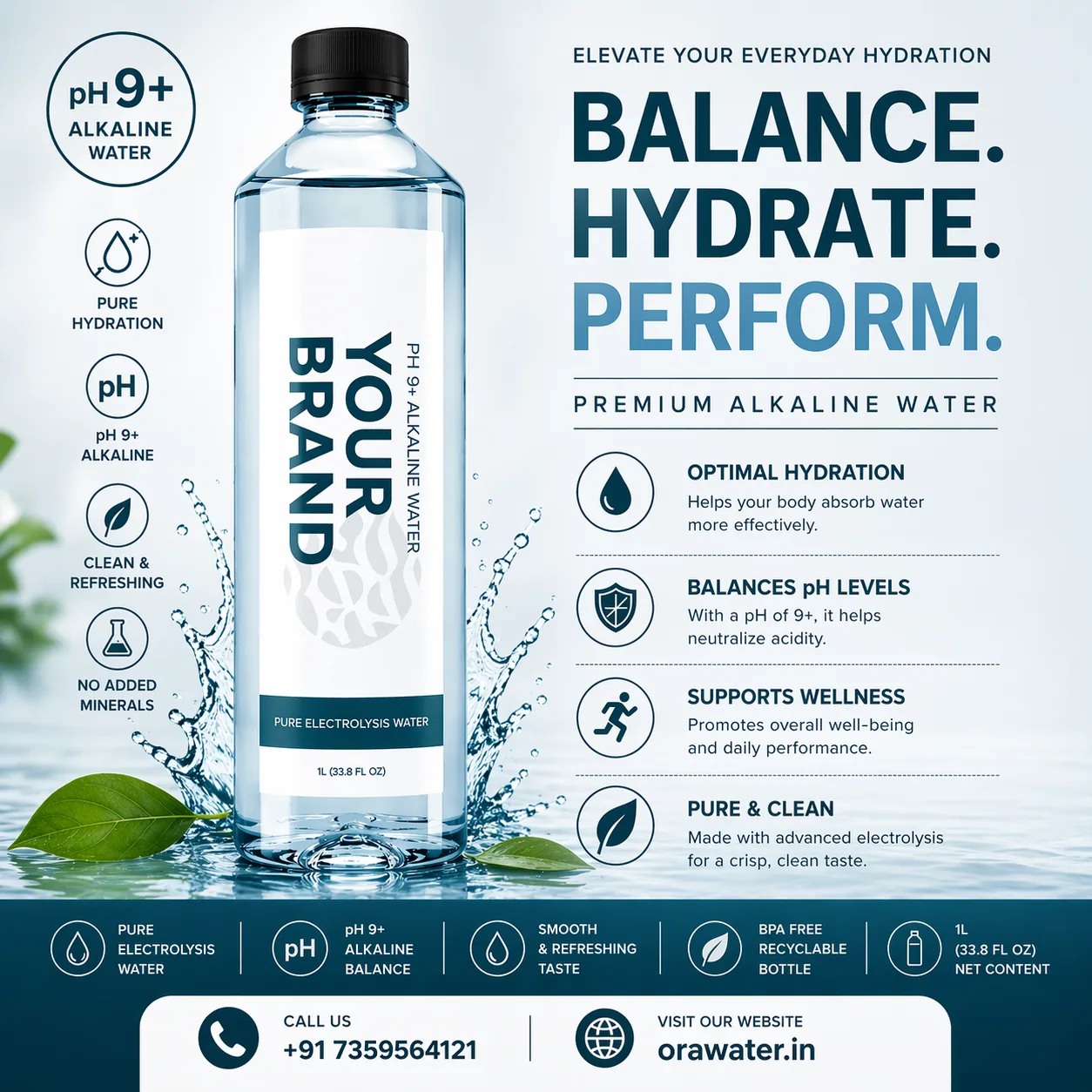
Walk down a bottled-water aisle in India today and you will see "alkaline" on labels at every price point. Some bottles advertise pH 7.4. Others go to 8.0, 8.5, or 9. The number is treated like a marketing flourish, but it actually matters. pH 8 is the point where alkaline water starts to do measurable physiological work: below that, you are essentially drinking neutral water with a label. This post explains why pH 8+ is the threshold worth paying attention to, what changes inside the bottle once you cross it, and how to recognise a brand that holds the pH end-to-end versus one that loses it before the bottle even reaches you.
Why pH 8+ Is the Functional Threshold
The pH scale runs from 0 to 14, with 7 as neutral. Regular bottled mineral water sits between 6.5 and 7.5. Anything above 7 is technically alkaline, but the body does not notice a meaningful shift until water reaches pH 8 or higher. The clinical studies showing alkaline water can deactivate pepsin (the stomach enzyme linked to acid reflux) used pH 8.8 water, not pH 7.5. The research on faster post-exercise rehydration used pH 8.0 to 9.0 mineralised water. The taste difference most fine-dining sommeliers can identify only becomes detectable above pH 8. Below that threshold, the chemistry is almost the same as regular water and the benefits are mostly marketing language.
For ORA Water and most premium Indian brands, the operating range is pH 8 to 9. Above pH 9.5 the water starts to develop a slightly soapy aftertaste and becomes harder to mineralise stably for shelf-life storage. The 8 to 9 band is where the science, the taste, and the supply-chain economics all line up.
What pH 8+ Actually Does Inside the Body
- Deactivates pepsin in the throat and oesophagus. Pepsin is the enzyme that causes the burning sensation of acid reflux. Research published by the Voice Institute of New York (Koufman, 2012) showed that water at pH 8.8 irreversibly deactivates pepsin on contact. People with chronic mild reflux often report symptom relief within days of switching from regular bottled water to pH 8+ alkaline.
- Speeds rehydration after exercise. A 2010 study in the Journal of the International Society of Sports Nutrition found mineralised alkaline water at pH 8 to 9 rehydrated subjects measurably faster than tap-pH water. The mechanism is partly the higher pH and partly the calcium, magnesium, and bicarbonate that come with it. The effect is modest but real: useful enough that long-distance runners and gym chains in India increasingly stock alkaline water for member use.
- Contributes calcium and magnesium that is highly bioavailable. A litre of well-mineralised pH 8+ water can supply 10 to 15 percent of daily magnesium requirement and a meaningful fraction of calcium. Mineral absorption from water is roughly as efficient as from supplements: the body does not distinguish much between the two. For people whose diets are low in dairy or leafy greens (which describes a large share of urban Indian diets), this is a quietly useful contribution.
- Improves taste perception with food. Restaurateurs report that a pH 8+ glass-bottled water on the dinner table changes how diners perceive both the food and the meal pacing. The chemistry is subtle: higher pH water reduces astringency from tannins and rounds out the finish of acidic dishes. It is not a clinical effect, but it is a real sensory one, and it is why fine dining in India has largely moved to alkaline glass formats.
What Has to Be True for a Bottle to Stay at pH 8+
The pH printed on a label only matters if it survives the trip from plant to glass. A surprising share of "pH 8+" alkaline water in the market loses 0.5 to 1.0 pH unit during storage and transport because the mineralisation was done lightly or the bottling environment was acidic. By the time the customer drinks it, the water reads pH 7.5 to 7.8: neutral water in an alkaline-labelled bottle. The brand still meets its label on the test certificate (which was issued at bottling) but not at consumption.
A serious pH 8+ operation does three things differently. First, it uses calcium and magnesium bicarbonate as the alkalising agents (not sodium-based buffers. Bicarbonate chemistry is naturally stable over months in a sealed bottle. Second, it batches and tests pH at three checkpoints: post-mineralisation, post-fill, and again 30 days into shelf life as a sample. Third, it uses bottles and caps that do not interact with the contents) food-grade PET maintains pH 8 to 9 across normal Indian summer shelf life; borosilicate glass is even better.
How to Verify pH 8+ on a Real Bottle
- Read the mineral profile on the label. A genuine pH 8+ water lists calcium, magnesium, and bicarbonate in mg/L. If the label only shows pH and TDS, the brand is asking you to trust one number, that is a soft signal.
- Look for the BIS / ISI mark. India's Bureau of Indian Standards licence applies to bottled drinking water across the board and is the floor for clean production. A BIS-licensed plant has been audited for source, purification, and packaging.
- Ask for a batch test certificate, not just a one-time analysis. A serious supplier can produce per-batch reports showing pH and mineral consistency. ORA Water provides batch-level certificates to corporate and hospitality clients on request.
- Test with a basic pH strip. pH strips from any pharmacy resolve to 0.5 units, which is enough to distinguish a true pH 8.5 bottle from a label-only pH 7.8 imposter. If the strip lights up between 8 and 9, the water is genuinely in range.
pH 8+ Is Not a Miracle: But It Is a Meaningful Daily Upgrade
No alkaline water cures diseases. Your blood pH is held at 7.35 to 7.45 by your kidneys and lungs regardless of what you drink, and any brand claiming to shift it is overstating the chemistry. What pH 8+ alkaline water actually does is what the studies show: slightly better hydration, mild reflux relief, useful mineral contribution, cleaner taste. None of these are revolutionary in isolation. Stacked together, across hundreds of glasses a year, they add up to a noticeably better drinking-water habit.
The case for pH 8+ over regular water is the case for paying attention to the things you put in your body every day. The case for choosing a brand that genuinely holds pH 8+ over one that prints the number on the label without backing it up is the case for not being deceived. Both are worth caring about.
ORA Water: Verified pH 8 to 9 in Every Bottle
ORA Water alkaline products are mineralised with calcium and magnesium bicarbonate to a target pH range of 8 to 9. Every batch is tested at three points (post-mineralisation, post-bottling, and a 30-day storage sample) and the test results are filed against the batch code printed on each bottle. The lineup includes 1 litre PET for daily use, 300ml borosilicate glass for hotel and restaurant tabletops, and 750ml borosilicate glass for fine dining and corporate events. Alkaline ice cubes (pH 8+) are available for bars and event venues that want their cocktails to hold their pH end-to-end as the ice melts.
Custom labels are available for hotels, restaurants, corporate clients, salons, and event venues across India. Sample boxes ship to Ahmedabad, Gandhinagar, Surat, Mahesana, Rajkot, Junagadh, and pan-India within 5 to 7 working days. Submit a request via the inquiry form or call +91 7359564121.