For two decades, bottled water in India was a commodity: a one-litre PET bottle, bought on price and forgotten the moment it was opened. That market still exists, but it is no longer where the growth or the margin is. The fastest-moving part of the category today is premium water: glass bottles, pH-verified mineral formats, custom-label runs for hotels and brands, and smaller single-serve sizes designed for a table rather than a backpack. For any hospitality group, corporate buyer, or retail brand in Gujarat, understanding this shift is now a commercial decision, not a lifestyle one.
What “Premium” Actually Means in Water
Premium is not just a higher price on the same product. In water it is a specific set of attributes a buyer can see, taste, and verify. Strip away the marketing and a genuinely premium water comes down to a handful of things working together:
- Format and material: glass over PET, and considered sizes (250ml, 300ml, 500ml, 750ml) that suit a table setting instead of a single 1-litre catch-all.
- Verified water quality: a stated, tested pH for balanced mineral water, not a vague “pure” claim. The number should be backed by batch testing.
- Provenance and certification: BIS/ISI compliance, traceable batch numbers, and a plant that can show its test certificates on request.
- Brand and design: custom labels, clean typography, and packaging a five-star hotel or a wedding table is willing to display rather than hide.
- Service around the product: reliable delivery windows, format flexibility, and order minimums that fit a real B2B operation instead of a retail shelf.
What’s Driving the Premium Shift
The move up-market is not a single trend, it is several reinforcing ones arriving at the same time:
- Rising disposable income and an expanding urban middle class that treats water as part of an experience, not just hydration.
- A durable health-and-wellness wave: added minerals and functional variants like vitamin-enhanced water now read as everyday choices rather than niche ones.
- Hospitality upgrading: hotels, restaurants, cafés, and salons compete on details, and the water on the table is one of the cheapest details to upgrade for a visible return.
- The sustainability conversation: glass and reusable formats increasingly win over single-use PET in premium venues, both for perception and for genuine waste reduction.
- The rise of events and experiential spaces: weddings, conferences, and launches want branded, presentable water that photographs well and reinforces the host’s image.
- Brand-building by businesses: custom-label bottles turn a consumable into a marketing surface that stays in front of a client for the length of a meeting or a stay.
Where the Demand Is Concentrated
Premium water demand is overwhelmingly B2B before it is retail. The concentrated buyers are hotels and boutique stays, corporate offices and co-working spaces, premium salons and clinics, event and wedding caterers, fine-dining restaurants, and retail brands that want a private-label line. In Gujarat specifically, the tri-city belt of Ahmedabad, Gandhinagar, and Rajkot (plus Surat, Vadodara, and Mansa) has seen the sharpest uptake, as hospitality and corporate density there rewards visible quality. These buyers do not want a truckload of anonymous 1-litre bottles; they want a considered format, a consistent label, and a supplier who shows up on schedule.
The commercial takeaway: in the premium segment, the water inside is only part of what you are selling. Format, verified pH, certification, custom branding, and dependable delivery are what let a venue charge, and be seen, a category above standard supplied water, usually at marginal additional cost per bottle.
How Buyers Should Evaluate a Premium Supplier
Premiumisation only works if the supplier can actually deliver it consistently. Before committing a corporate or hospitality account, the questions worth asking are practical:
- Is the water BIS/ISI certified, and will they share batch test certificates on request?
- Is the pH stated and verified per batch, and is the mineral profile achieved through controlled mineralisation with documented calcium, magnesium, and bicarbonate levels?
- What formats and materials are available (glass vs PET, 250ml through 750ml), and can they mix formats across one account?
- What is the custom-label minimum order, turnaround, and design support, and who owns the artwork?
- How reliable is delivery: standing weekly windows for recurring accounts, and event-window dispatch for one-off bookings?
- What is the real service area, and can they support pan-Gujarat or pan-India for multi-city groups?
Positioning for the Shift with ORA
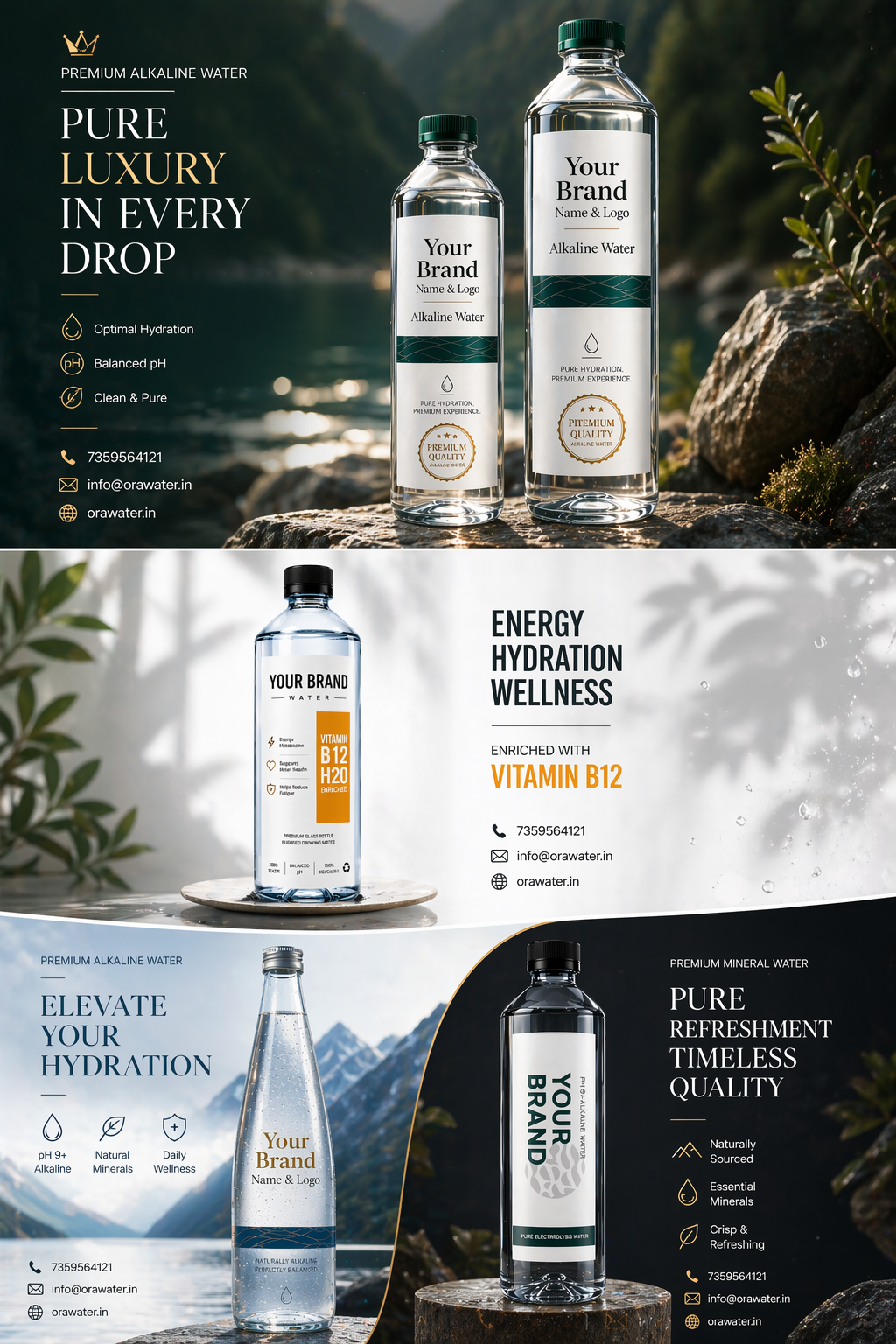
ORA Water is built for exactly this segment. The range spans BIS/ISI-certified mineral water, glass bottles, and vitamin B12 water, in formats from 250ml single-serve up to 750ml, with custom-label runs for hotels, brands, and events. Recurring corporate and bulk accounts get standing delivery windows; events get window-based dispatch. Primary service covers Ahmedabad, Gandhinagar, and Rajkot, with pan-Gujarat and pan-India delivery for multi-city groups. If your venue or brand is trying to move up from commodity water, the practical next step is a format-and-label conversation, not a bulk price sheet.