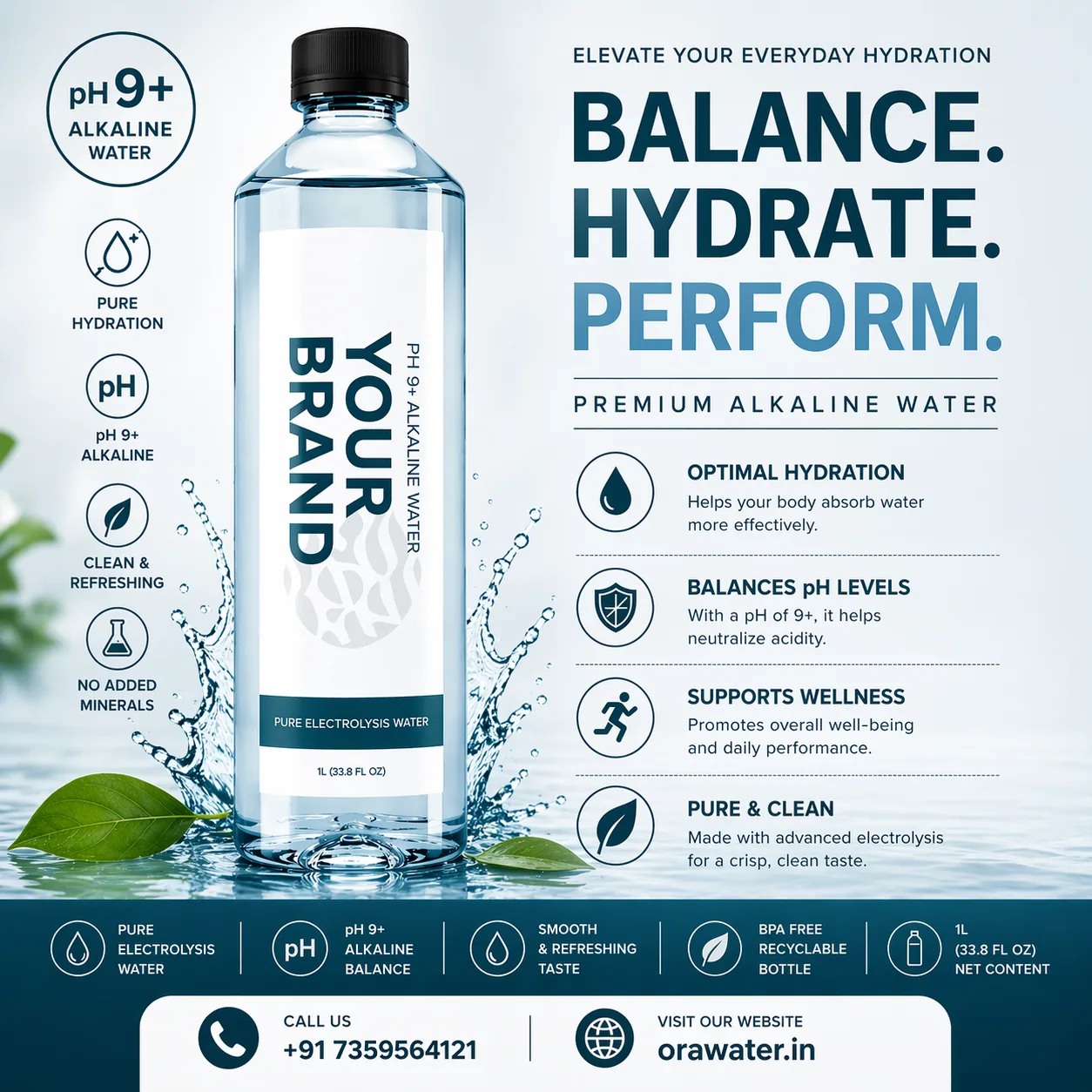
Walk into any pharmacy, gym, or premium grocery in India today and you will find two types of bottled water sitting side by side: regular mineral water at pH 7 to 7.5, and alkaline water at pH 8 to 9. The numbers look close. The price difference is noticeable. The question is whether the gap between them is meaningful, or just marketing. This guide works through that question methodically: what pH actually measures, what changes when you move from 7 to 8.5, and which choice makes sense depending on how you use your water.
What pH Measures, and Why the Scale Is Not Linear
pH is a measure of hydrogen ion concentration in a solution. The scale runs from 0 to 14. Pure distilled water at 25°C sits at exactly 7: neutral. Anything below 7 is acidic; anything above is alkaline. Common reference points: lemon juice is pH 2, black coffee is pH 5, tap water in most Indian cities is pH 7 to 7.5, seawater is pH 8, and a bicarbonate solution is pH 8.3 to 8.5.
The scale is logarithmic, not linear. Water at pH 6 is ten times more acidic than water at pH 7. Water at pH 9 is ten times more alkaline than water at pH 8. That means the difference between regular water at pH 7 and alkaline water at pH 8.5 is not a gentle slope, it is a 31-fold difference in hydrogen ion concentration. When brands talk about "mildly alkaline" water, the chemistry behind it is more dramatic than the word "mild" suggests.
What "Normal" Water pH Looks Like
In India, the Bureau of Indian Standards (BIS) under IS 14543 specifies that packaged drinking water must fall between pH 6.5 and 8.5. Most regular bottled mineral water lands between pH 6.8 and 7.5: slightly acidic to neutral. This is the pH range of most surface and groundwater sources after purification and before any mineralisation adjustment.
Water in this range is perfectly safe, adequately hydrating, and suitable for all everyday uses. If a bottle does not mention pH prominently on its label, it is almost certainly in this range. The taste is clean and neutral: what most people describe as "just water." There is no functional problem with pH 7 water; it is the baseline that human physiology is calibrated to handle.
What Alkaline Water pH Looks Like
Alkaline water starts meaningfully above pH 8. The most common range for premium bottled alkaline water in India is pH 8.0 to 9.0. Above pH 9.5, water starts to develop a faintly soapy or mineral-heavy taste; that ceiling exists for sensory as much as any other reason. Below pH 8, water is technically alkaline but barely: the difference in taste and mineral content compared to neutral water is minimal.
The pH in quality alkaline water is raised through mineralisation: calcium bicarbonate and magnesium bicarbonate are added in calibrated proportions after RO purification. These minerals are what lift the pH and sustain it stably in a sealed bottle for months. This is different from water that has been run through an electric ioniser, which raises pH by splitting water molecules electrically; that pH is temporary and unstable once bottled.
The Real Differences Between pH 7 and pH 8.5 Water
- Taste and mouthfeel. Alkaline water at pH 8 to 9 has a noticeably smoother, softer mouthfeel compared to neutral or mildly acidic water. This is not a subjective marketing claim, it is a direct result of the higher bicarbonate and mineral content. Fine-dining restaurants that serve water alongside food have largely moved to alkaline glass-bottled water because it pairs better with complex dishes and does not amplify acidic notes the way neutral water can.
- Mineral content. The mechanism that raises pH in quality alkaline water, mineralisation with calcium and magnesium bicarbonate, adds minerals that have their own nutritional value. A litre of well-mineralised pH 8.5 water can supply 10 to 15 percent of daily magnesium needs and a meaningful fraction of calcium. Regular purified water at pH 7 that has not been mineralised is nutritionally inert, it hydrates but does not contribute minerals.
- Stability on the shelf. Alkaline water produced through mineralisation is pH-stable for months in a sealed bottle. Regular packaged water is also stable in its range. Both hold their pH well when bottled correctly. The risk of pH drift applies more to ionised alkaline water (which degrades quickly) than to mineralised alkaline water.
- Interaction with stomach acid. When alkaline water is consumed, it reacts with stomach acid (pH 1.5 to 3.5): the stomach buffers it quickly. For most people this is irrelevant. For people with mild acid reflux or pepsin sensitivity, consuming water at pH 8.8 has been shown in research to irreversibly deactivate pepsin (the enzyme responsible for reflux symptoms) before it reaches the oesophagus. Regular water at pH 7 has no equivalent effect.
- Hydration speed after exercise. Controlled studies have found that mineralised alkaline water rehydrates subjects measurably faster than neutral water after exercise-induced dehydration. The combined effect of the minerals and higher pH appears to improve electrolyte replenishment. For endurance athletes and people who exercise in heat, this is the most functionally relevant difference between the two.
What Does Not Change with pH
Here is where it is important to be honest. Your blood pH is held between 7.35 and 7.45 by your kidneys and respiratory system, regardless of what you drink. Alkaline water does not "alkalise your body" in any systemic sense, that claim does not survive physiological scrutiny. Drinking pH 9 water will not shift your blood pH or change the acid-base environment of your tissues. Your body regulates that tightly and would shut down dangerous functions quickly if it did not.
The benefits that are real (better mouthfeel, mineral contribution, mild reflux relief, marginal hydration speed) operate at the local level: in the mouth, throat, oesophagus, and gut, before the body fully buffers the water. That is still useful. It is just more modest than some marketing suggests.
The honest summary: normal pH water is perfectly adequate for daily hydration. Alkaline water at pH 8 to 9 is a meaningful upgrade for taste, mineral intake, acid reflux sensitivity, and post-exercise recovery, as long as the pH is achieved through mineralisation, not temporary ionisation.
How to Choose Between Normal pH and Alkaline Water
- For general daily hydration at home. Either works. If cost is the deciding factor, quality mineral water at pH 7 to 7.5 is entirely adequate. If taste and mineral content matter to you, alkaline water at pH 8 to 9 is a noticeable improvement.
- For athletes, gym-goers, and anyone active in Indian summer heat. Alkaline water is the better choice. Faster rehydration, better electrolyte profile, and easier on a stomach that is emptying during exertion are all real advantages in this context.
- For people with acid reflux or sensitive digestion. Alkaline water at pH 8.5 or above is worth trying as a daily switch. Clinical evidence supports the role of pH 8.8 water in reducing reflux symptoms. It is not a medication, but it is a practical, low-risk daily input with meaningful precedent.
- For hotel and restaurant tabletop service. Alkaline water in a glass bottle at pH 8 to 9 is the premium standard. The mouthfeel pairs better with food, the mineral content justifies the label, and the glass format communicates a quality of service that neutral water in PET cannot match.
- For corporate and office supply. Either format works for general use. For offices that position around wellness or serve senior leadership and external clients, alkaline water at pH 8 to 9 in custom-labelled bottles is a visible, relevant signal.
What to Look for on the Label
A bottle that lists only "pH 8.5" is providing one data point. A bottle that lists calcium (mg/L), magnesium (mg/L), bicarbonate (mg/L), TDS, and pH is telling you how the pH was achieved, which is the more useful number. If the mineral profile is present and calcium and magnesium bicarbonate are the primary minerals, the pH is real, stable, and nutritionally meaningful. If the only information is pH, the alkalinity may have been achieved through less stable means.
Also check for a BIS/ISI mark (mandatory for packaged drinking water in India under IS 14543) and a batch number that maps to a test certificate. Any supplier who provides alkaline water at scale should be able to show batch pH, TDS, and microbial test reports on request. If they cannot, the number on the label is not supported by documentation.
ORA Water: Normal pH and Alkaline Options
ORA Water produces both mineral water (pH 7.0 to 7.5) and alkaline water (pH 8.0 to 9.0) from our Junagadh, Gujarat plant. Mineral water uses a 10-stage purification system with calibrated re-mineralisation to maintain calcium and magnesium content at levels that produce clean taste and consistent TDS. Alkaline water uses the same purification base followed by a dedicated mineralisation stage with calcium and magnesium bicarbonate to reach and hold pH 8 to 9 across shelf life.
Both ranges are BIS/ISI certified, batch-tested before bottling, and available in formats from 200ml PET through 750ml borosilicate glass. Custom labels are available for hotels, restaurants, corporate offices, and event clients across Gujarat and pan India. If you want to compare both formats before placing an order, we dispatch sample boxes to Ahmedabad, Gandhinagar, Surat, Rajkot, Mahesana, Junagadh, and pan-India.